What is osteoporosis? Is it dangerous? Is there a bone remodeling process? Osteoporosis in a few words. Is there prevention for osteoporosis? What are the risk factors? Diagnosis.
The skeleton is a metabolically active organ that undergoes continuous remodeling throughout our lives. Bones provide support and protection to the human body. In adults, the skeleton is subject to a remodeling process that must be strictly regulated in order to maintain stable bone mass.
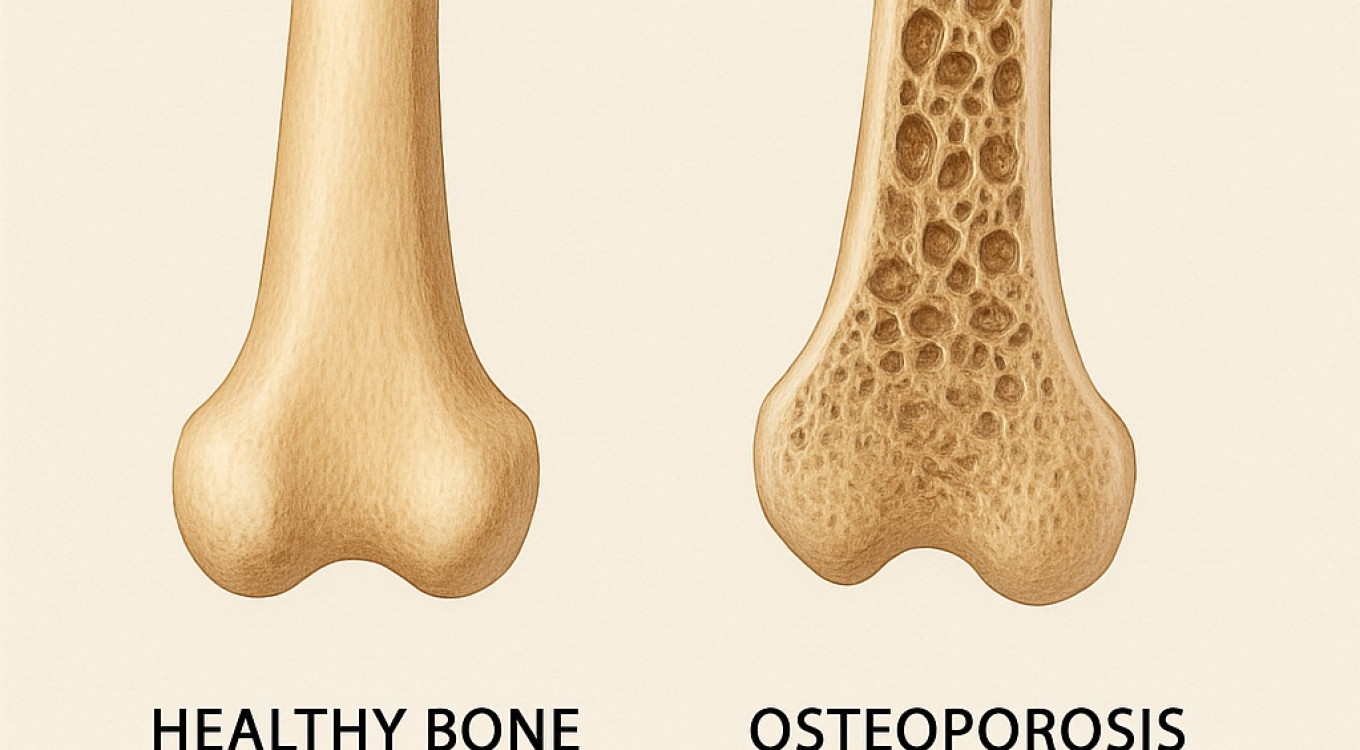
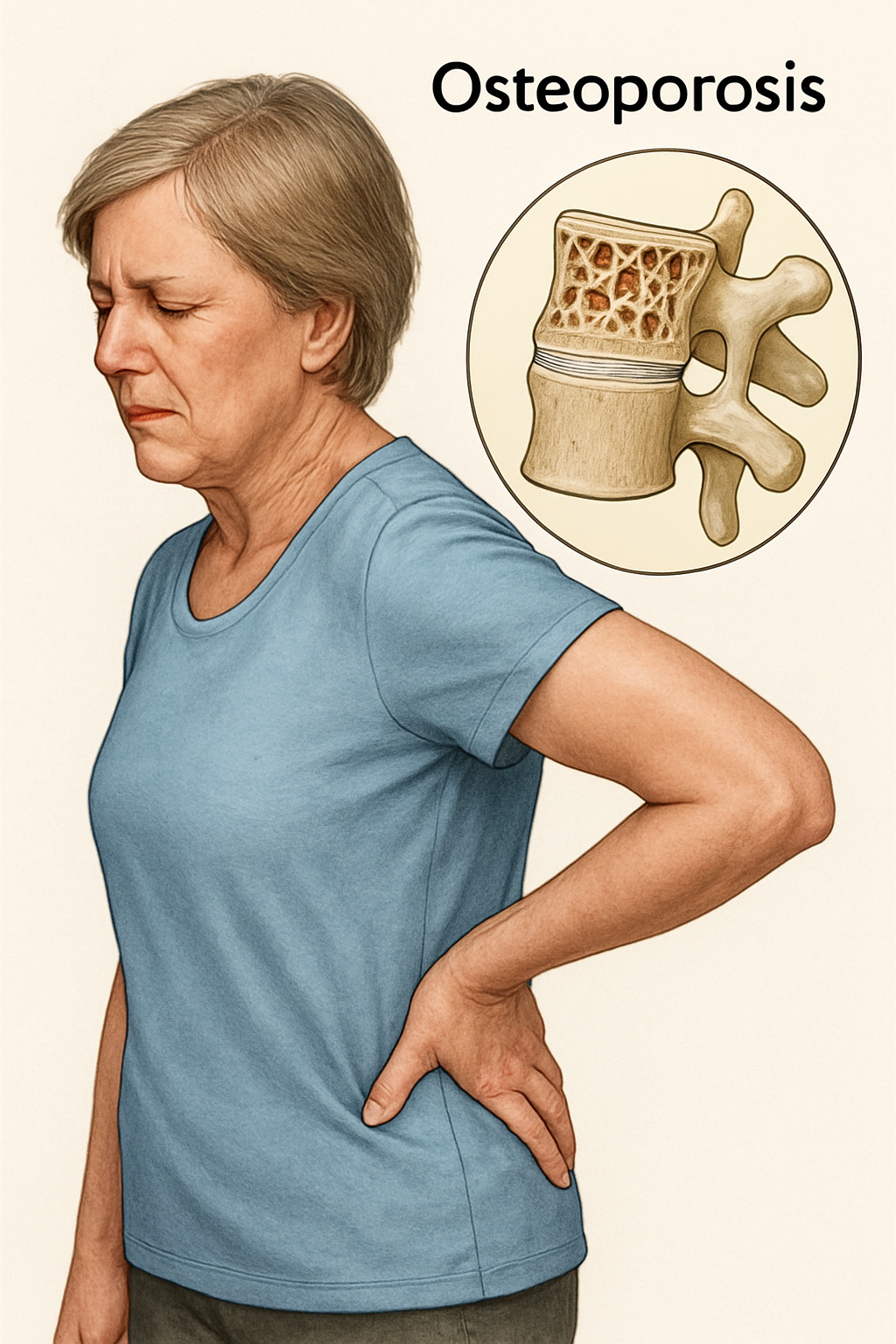
What Is Osteoporosis? Osteoporosis is a bone disease. It is characterized by a DECREASE in bone mass and a disruption of the bone tissue’s microarchitecture. It affects both women and men, but it occurs more frequently in women after menopause.
Is It Dangerous? Osteoporosis must be monitored because it makes bones fragile. This means that even a minor fall can easily cause fractures, especially in the spine, hip, and wrist. People with osteoporosis often experience muscle weakness and increased spinal kyphosis, which leads to poor balance control, falls, and vertebral fractures.
Is There a Bone Remodeling Process? Bone remodeling is carried out by osteoclasts (bone resorption) and osteoblasts (bone formation). The coordinated action of these two processes is called the coupling phenomenon, while disruption of this balance is known as the uncoupling phenomenon.
Osteoporosis, in simple terms, occurs when: Bone Resorption > Bone Formation
It should be noted that there are two types of osteoporosis:
• Type I: Postmenopausal Osteoporosis Occurs in women over the age of 50, most commonly between 50–65 years (ratio of 6 women to 1 man). Estrogen levels decrease, and estrogen plays a crucial role in maintaining strong bones.
• Type II: Senile Osteoporosis Occurs after the age of 70–75 (ratio of two women to one man). There is a reduction in osteoblastic activity, resulting in bones becoming thin and porous—FRAGILE BONES.
Is There Prevention for Osteoporosis? Prevention of osteoporosis begins during adolescence. Emphasis should be placed on proper nutrition, physical activity, and healthy daily habits. Because multiple pathophysiological mechanisms contribute to bone density loss, failure to care for the skeleton from a young age may later lead to osteopenia (initial reduction of bone mass) and eventually osteoporosis.
What Are the Risk Factors? A significant role is played by heredity (family history) as well as genetic and gender-related factors (men and postmenopausal women). Research has also shown that osteoporosis occurs more frequently in individuals of Caucasian ethnicity.
Osteoporosis risk can be reduced by limiting:
-
Smoking
-
A sedentary lifestyle
-
Eating disorders such as anorexia nervosa or bulimia
-
Excessive caffeine and alcohol consumption
-
Low calcium intake
-
Use of glucocorticoids (corticosteroids) and anticonvulsant medications
Diagnosis Diagnosis is performed using a scanning device called DXA (DEXA), which assesses bone mass or bone density, essentially evaluating bone quality.
SUN – NUTRITION – EXERCISE To maintain healthy and strong bones, a balanced diet rich in fruits and vegetables is essential. Many minerals, trace elements, and vitamins contribute to bone health, including vitamin D, which we obtain through sun exposure.
Daily exercise also plays a vital role in skeletal health. Examples include brisk walking, muscle-strengthening exercises with light weights or resistance, and even dancing. Correcting postural alignment (kyphosis) is a key factor in preventing falls and fractures in older adults with osteoporosis.
All of these contribute significantly to improved balance, enhanced neuromuscular coordination, increased endurance, and better mood.
Question: Do swimming and cycling help prevent osteoporosis?
Research has shown that swimming does NOT have positive effects on bone mass (Magkos et al., 2007), nor does cycling (Barry & Kohrt, 2008). This is because bones benefit from mechanical loading, meaning contact with the ground (foot impact and ground reaction force – Newton’s Third Law).
???? Always consult your doctor or physiotherapist.
BSc, MSc, NDT – Physiotherapist
Santoriniou Maria-Georgina
KDIF EFALTIRIO