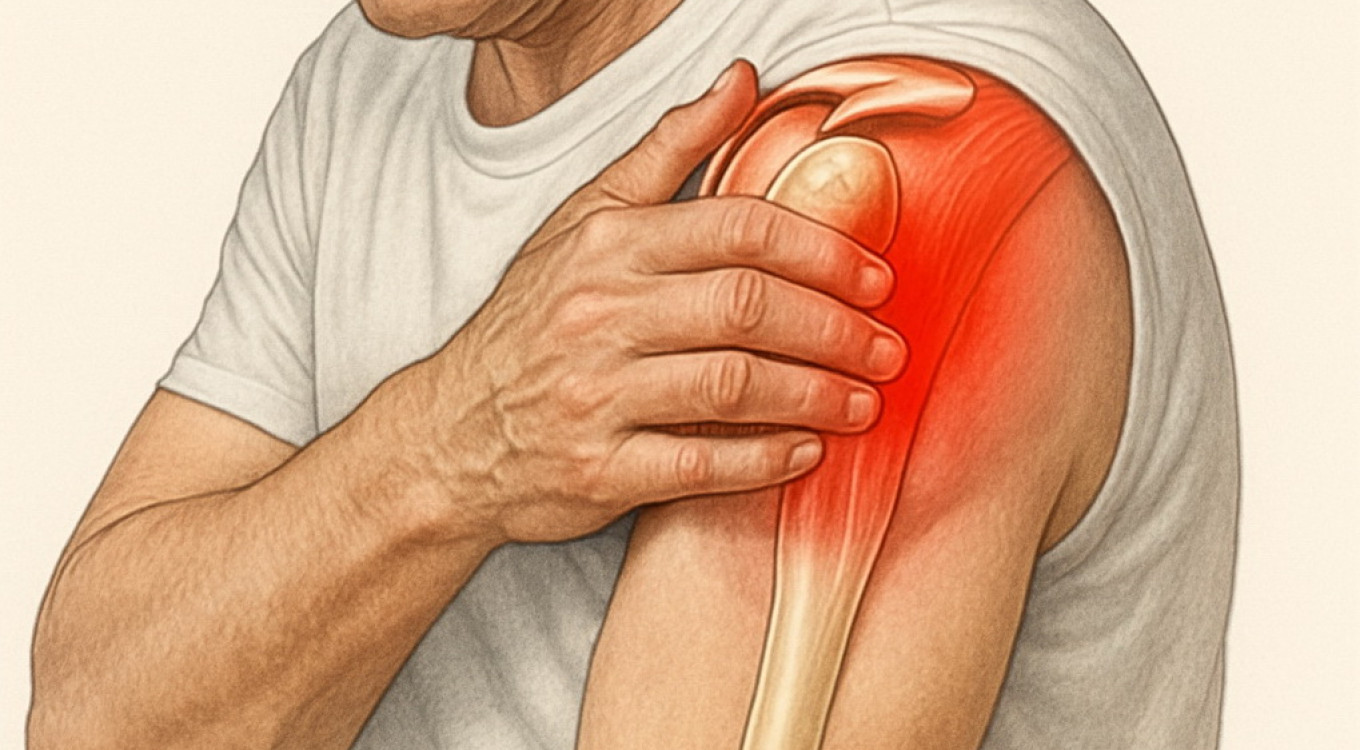
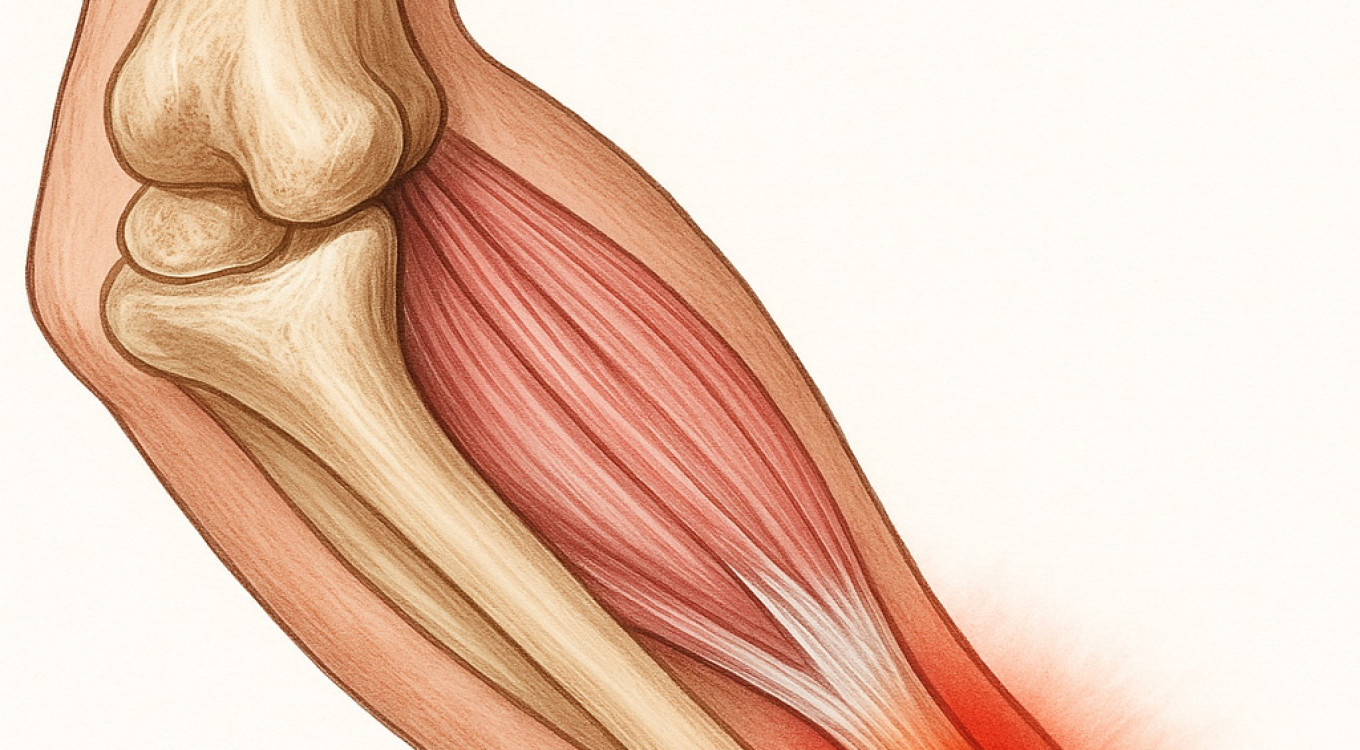
What is a tendon and what is this musculoskeletal condition? What is tendinitis? How can I tell if I have tendinitis? How is it diagnosed? What are the first steps we can take at home? Purpose: Returning to DAILY ACTIVITIES and WORK without excessive fatigue or pain.
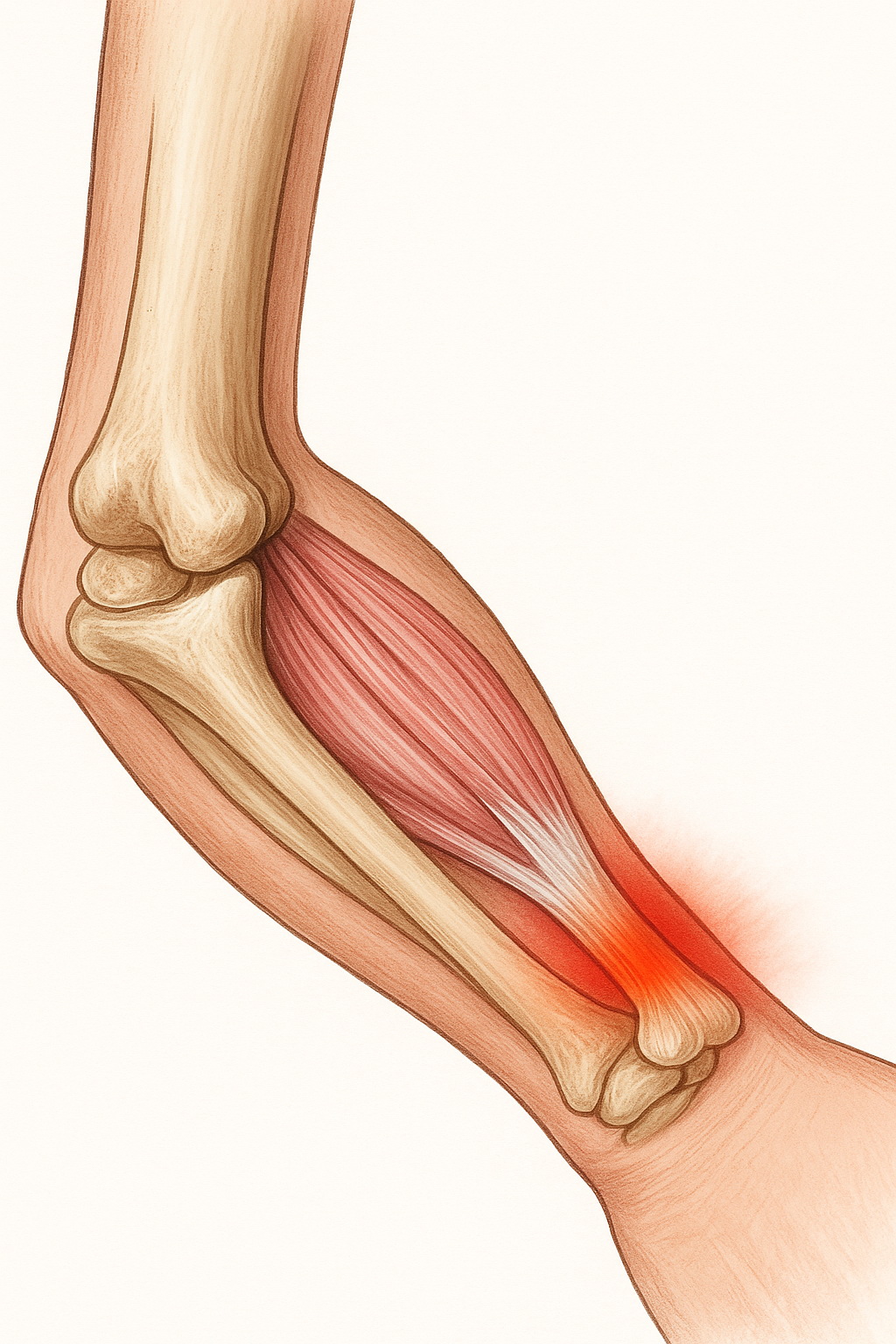
What Is a Tendon and What Is This Musculoskeletal Condition? A tendon is an anatomical structure—a fibrous connective tissue (imagine it like a cord)—that connects a muscle to a bone. It is the continuation of the muscle. In this way, movement in our body is made possible. Tendons are designed to withstand significant loads.
Despite their ability to adapt to loading, repetitive use often leads to tendon injuries.
What Is Tendinitis? It is a compound word consisting of tendon and the suffix -itis (inflammation).
TENDINITIS IS THE INFLAMMATION OF A TENDON.
If the injury occurred a few days ago, it is correct to call it tendinitis, as this refers to an acute (recent) phase of injury. The individual has a tendon condition accompanied by inflammation at the site of pain.
If the injury occurred some time ago and pain is still present, then it is not tendinitis, but tendinous fibrosis. In this case, there is no inflammation but degeneration (chronic injury) of the tendon.
If diagnosis is not confirmed through imaging, then there is no inflammation, and the condition is considered a chronic tendon injury, although pain may still be present.
-
Pain during activity
-
Local tenderness on palpation
-
Increased temperature in the affected area
-
Swelling (edema)
-
In most cases, redness at the site of injury
How Can I Tell If I Have Tendinitis?
All of the above lead to reduced tendon performance, meaning DECREASED FUNCTIONALITY of the individual.
How Is the Diagnosis Made? A proper diagnosis is made through imaging, such as:
-
X-ray, mainly used for bone-related injuries
-
Computed Tomography (CT), which provides detailed information
-
Magnetic Resonance Imaging (MRI), which is most suitable for tendon injuries due to greater clarity of soft tissue damage
It is important to note that both rehabilitation and protection from re-injury are of primary importance.
What Are the First Steps We Can Take at Home?
ICE Apply ice wrapped in a towel for 10 minutes, 3–4 times per day.
Caution: Do not exceed 10 minutes, as ice can cause cold burns (frostbite).
REST Reduce activity to decrease repetitive loading of the injured tendon.
Complete immobilization should be avoided, as it may lead to muscle atrophy and muscle damage.
ELEVATION Place the injured limb (arm or leg) on pillows, slightly above heart level.
This helps reduce swelling through natural absorption by the body.
COMPRESSION The use of a brace or splint is a special case and should only be applied following instructions from a doctor or physiotherapist.
Each individual is different; therefore:
-
each exercise approach is different,
-
healing time varies,
-
treatment duration differs,
always under the guidance of a physiotherapist.
Purpose Returning to DAILY ACTIVITIES and WORK without excessive fatigue or pain.
BSc, MSc, NDT – Physiotherapist
Santoriniou Maria-Georgina
Diagnosing Heel Pain in Adults - American Family Physician. (n.d.). Retrieved November 27, 2018, from www.aafp.org/afp
Dos Santos Franco, Y. R., Miyamoto, G. C., Franco, K. F. M., de Oliveira, R. R., & Cabral, C. M. N. (2019). Exercise therapy in the treatment of tendinopathies of the lower limbs: a protocol of a systematic review. Systematic Reviews, 8(1), 142. https://doi.org/10.1186/s13643-019-1058-9
Khan, K. M., Cook, J. L., Kannus, P., Maffulli, N., & Bonar, S. F. (2002). Time to abandon the "tendinitis" myth. BMJ (Clinical Research Ed.), 324(7338), 626–627. http://www.ncbi.nlm.nih.gov/pubmed/11895810
Kibler, W. B. (2007). Diagnosis, treatment and rehabilitation principles in complete tendon ruptures in sports. Scandinavian Journal of Medicine & Science in Sports, 7(2), 119–129. https://doi.org/10.1111/j.1600-0838.1997.tb00128.x
Magnusson, S. P., Langberg, H., & Kjaer, M. (2010). The pathogenesis of tendinopathy: balancing the response to loading. Nature Reviews. Rheumatology, 6(5), 262–8. https://doi.org/10.1038/nrrheum.2010.43