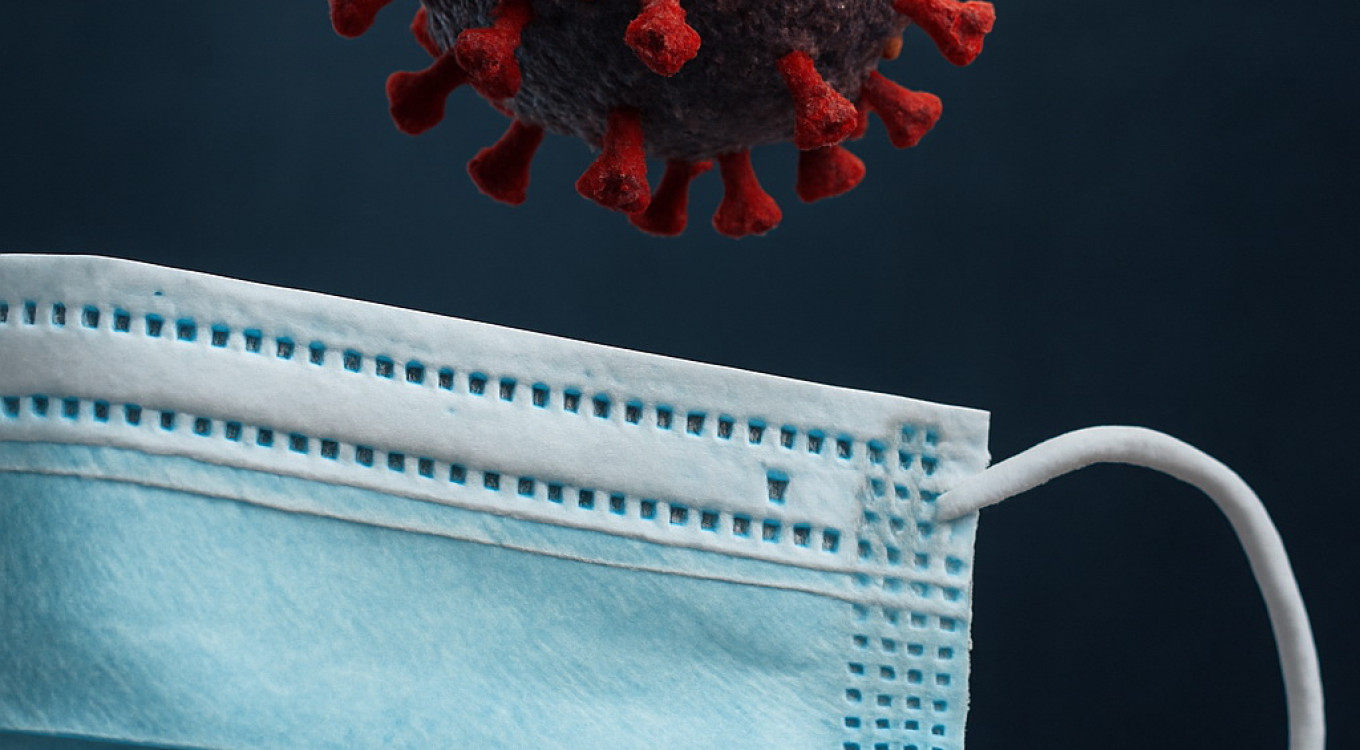
Do we really need to wear a mask? What is this virus? How can the coronavirus be transmitted? How does a mask protect me? Should only vulnerable groups wear masks? Which mask should I wear to be fully protected?
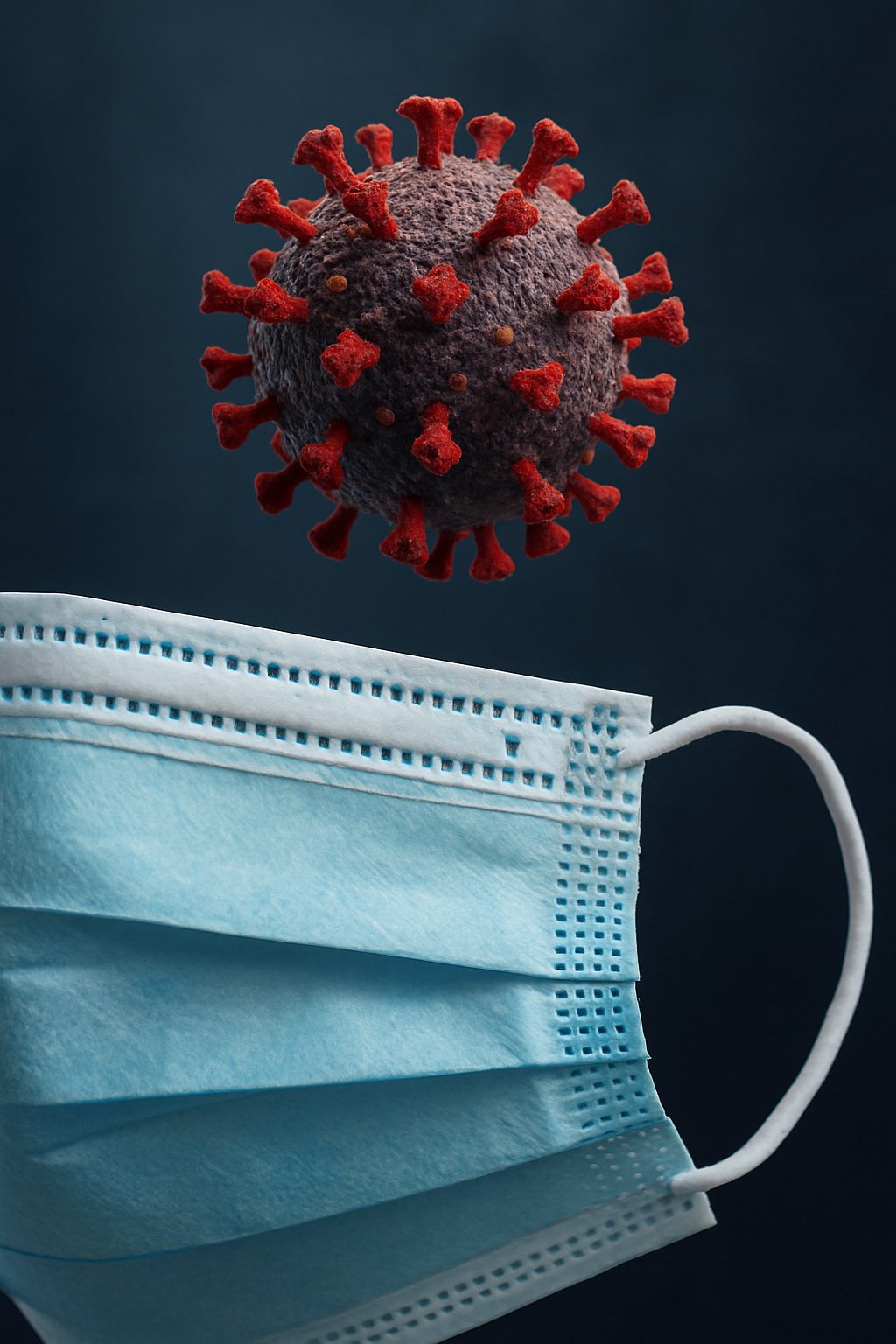
Do We Really Need to Wear a Mask? Protection through the use of face masks is an important research question for informing the response to the coronavirus disease 2019 (COVID-19). As is widely known, the outbreak of pneumonia first reported in Wuhan, China, in December 2019 has now become a global public health issue.
What Is This Virus? Coronavirus is a large family of viruses. When a person is infected with this virus, it may cause respiratory, cardiovascular, gastrointestinal, hepatic, and neurological diseases, while recent research has also shown kidney injury. Anyone can become infected with the virus.
How Can the Coronavirus Be Transmitted? The virus can be transmitted from person to person either:
-
Directly, through coughing, sneezing, and inhalation of droplets produced during speech
-
Indirectly, through contact with the eyes (e.g., via contact lenses), saliva, and the mucous membranes of the nose and eyes
Cough droplets can settle on objects and surfaces around an infected person, such as tables, doorknobs, and door handles. People may become infected by touching these objects or surfaces and then touching:
-
the eyes
-
the nose
-
the mouth
For this reason, it is important to wash hands regularly with soap and water or to clean them with alcohol-based hand sanitizer. As for surfaces, they can easily be cleaned with common household disinfectants that are effective in killing the virus. In addition to proper hand hygiene, correct use of a face mask is another important preventive measure.
How Does the Mask Protect Me? It is noteworthy that each cough can produce approximately 3,000 saliva droplet nuclei, while each sneeze can generate around 40,000 saliva droplets, which can travel several meters through the air.
If an individual is infected with the virus without knowing it—because they are asymptomatic—consider how quickly others around them could become infected if they are not protected by a barrier (mask) on their faces.
Especially for a vulnerable host, meaning someone who is more susceptible to disease, infectious saliva droplets may enter directly into the lungs and potentially lead to fatal outcomes.
For these reasons, infection with SARS-CoV can be minimized to some extent by wearing masks.
Should Only Vulnerable Groups Wear Masks? No. Studies have shown that mask use by healthy individuals is particularly beneficial, especially for COVID-19, where transmission can occur during the pre-symptomatic stage of the disease. Wearing a mask provides protection and safety against infection, especially when individuals are in enclosed and poorly ventilated spaces (offices, supermarkets, etc.).
Which Mask Should I Wear for Full Protection? Masks commonly used for protection against respiratory infections are categorized into three groups:
-
For healthcare workers
-
For sick patients (confirmed cases / vulnerable groups)
-
For healthy members of the community
Mask use should be applied by everyone who comes into contact with other people, and especially by individuals working in healthcare settings. The mask is a powerful tool, as it can prevent infections and reduce deaths.
1) Healthcare settings Continuous use of N95 respirator masks with filters offers greater protection compared to medical surgical masks and is also more protective than cloth masks. Depending on fabric and design, some cloth masks may not be safe for healthcare workers.
2) Patients The use of surgical masks by patients is likely protective, provided that they are worn correctly and properly fitted to the individual.
3) Healthy individuals Healthy people can use cotton (cloth) masks daily, as they are washable, reusable, and capable of offering protection against viruses.
Cotton masks with three layers and surgical masks can significantly reduce the number of microorganisms entering the respiratory system. However, surgical masks have been found to be three times more effective than cotton masks in blocking transmission.
The lack of full understanding of the detailed transmission mechanisms of SARS-CoV-2 may explain disagreements regarding the optimal type of mask. Nevertheless, the World Health Organization actively studies the evolving science of mask use and continuously updates its guidelines.
BSc, MSc, NDT – Physiotherapist
Santoriniou Maria-Georgina
KDIF EFALTIRIO
References
Baghizadeh Fini, M. (2020). Oral saliva and CVID-19. In Oral Oncology (Vol. 108, p. 104821). Elsevier Ltd. https://doi.org/10.1016/j.oraloncology.2020.104821
Chua, M. H., Cheng, W., Goh, S. S., Kong, J., Li, B., Lim, J. Y. C., Mao, L., Wang, S., Xue, K., Yang, L., Ye, E., Zhang, K., Cheong, W. C. D., Tan, B. H., Li, Z., Tan, B. H., & Loh, X. J. (2020). Face Masks in the New COVID-19 Normal: Materials, Testing, and Perspectives. Research, 2020, 1–40. https://doi.org/10.34133/2020/7286735
Ho, K. F., Lin, L. Y., Weng, S. P., & Chuang, K. J. (2020). Medical mask versus cotton mask for preventing respiratory droplet transmission in micro environments. Science of the Total Environment, 735, 139510. https://doi.org/10.1016/j.scitotenv.2020.139510
MacIntyre, C. R., & Chughtai, A. A. (2020). A rapid systematic review of the efficacy of face masks and respirators against coronaviruses and other respiratory transmissible viruses for the community, healthcare workers and sick patients. International Journal of Nursing Studies, 108, 103629. https://doi.org/10.1016/j.ijnurstu.2020.103629
MacIntyre, C. R., Chughtai, A. A., Seale, H., Dwyer, D. E., & Quanyi, W. (2020). Human coronavirus data from four clinical trials of masks and respirators. International Journal of Infectious Diseases, 96, 631–633. https://doi.org/10.1016/j.ijid.2020.05.092
Sommerstein, R., Fux, C. A., Vuichard-Gysin, D., Abbas, M., Marschall, J., Balmelli, C., Troillet, N., Harbarth, S., Schlegel, M., Widmer, A., Balmelli, C., Eisenring, M. C., Harbarth, S., Marschall, J., Pittet, D., Sax, H., Schlegel, M., Schweiger, A., Senn, L., … Zanetti, G. (2020). Risk of SARS-CoV-2 transmission by aerosols, the rational use of masks, and protection of healthcare workers from COVID-19. In Antimicrobial Resistance and Infection Control (Vol. 9, Issue 1). BioMed Central. https://doi.org/10.1186/s13756-020-00763-0
World Health Organization : Q&A on coronaviruses (COVID-19). (n.d.). Retrieved October 8, 2020, from https://www.who.int/emergencies/diseases/novel-coronavirus-2019/question-and-answers-hub/q-a-detail/q-a-coronaviruses
Xu, R., Cui, B., Duan, X., Zhang, P., Zhou, X., & Yuan, Q. (2020). Saliva: potential diagnostic value and transmission of 2019-nCoV. In International Journal of Oral Science (Vol. 12, Issue 1, pp. 1–6). Springer Nature. https://doi.org/10.1038/s41368-020-0080-z